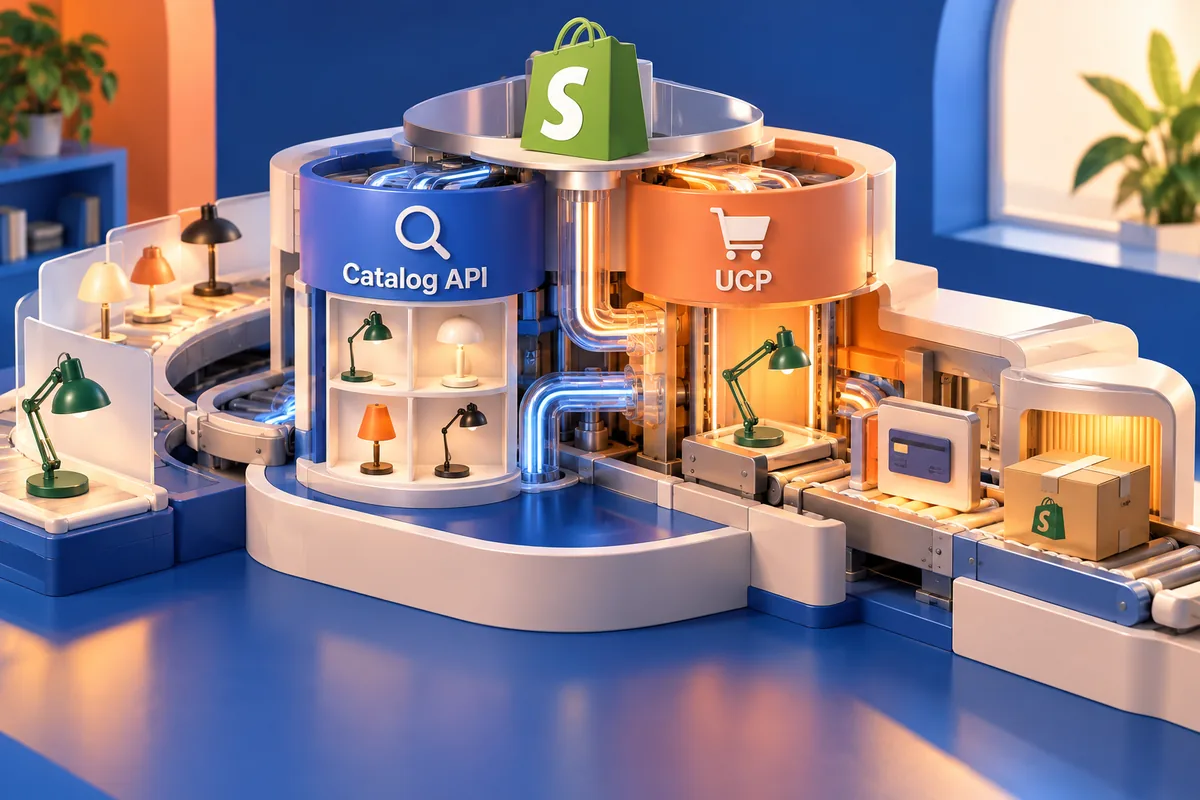
A shopping assistant can produce an impressive recommendation in a few seconds. The more interesting test is what happens when the customer chooses an item and tries to buy it. Shopify’s Spring ’26 developer announcement opens self-service access to its agentic commerce infrastructure, including UCP and Catalog API. That gives teams a useful reason to plan a complete, bounded buying journey rather than another isolated chat demonstration.
Choose a purchase people can evaluate
Pick a product range where the selection criteria are understandable. A buyer might need a replacement fitting with particular dimensions, or a lamp suited to a small desk. Write down the facts the assistant needs, the questions it should ask and the circumstances in which it should stop and seek clarification.
Keep the first pilot small enough to inspect. A narrow catalogue with reliable product data is easier to evaluate than a broad selection carrying inconsistent descriptions. Invite the product owner to review the recommendation as well as the technical response. They are well placed to recognise an appealing answer that selects the wrong item.
Separate discovery from the current offer
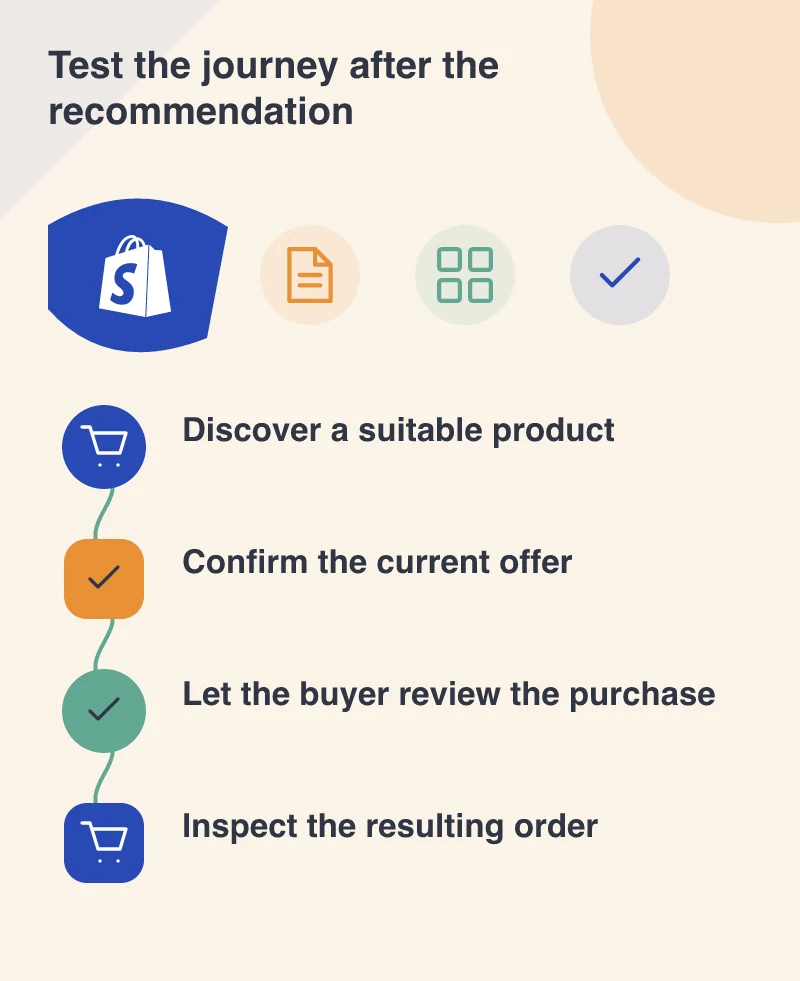
Shopify describes Catalog API as the discovery layer alongside UCP’s commerce capabilities. Use that distinction to ask which information supports a recommendation and which must be confirmed when the buyer proceeds. Price, inventory, selected variation and destination can affect whether an earlier suggestion remains appropriate.
Make a change during the rehearsal. Let the recommended item become unavailable or alter a relevant choice before checkout. The experience should explain the updated situation and offer a sensible next step. A test that only repeats the same successful purchase will miss this ordinary source of customer frustration.
Keep the buyer’s decisions visible
Show the chosen item and the offer the buyer is considering, with a clear point at which they review the purchase details. Decide what happens if the person changes their mind or needs a colleague’s help. A conversational interface still has to make those moments understandable.
Use the appropriate test environment and supported purchase facilities while developing the pilot. Verify which capabilities and merchant conditions apply to the intended audience. Self-service developer access makes it easier to begin building; a production experience still needs a defined scope and evidence that its complete journey works.
Inspect the order after the conversation ends
Follow the test purchase into fulfilment, confirmation messages and support. Check that the selected item, delivery details and order reference remain recognisable. The team should be able to explain where the purchase came from and continue helping the customer without reconstructing the whole chat.
Record the cases that passed and the ones needing a better response. This gives the business a useful basis for deciding whether to widen the pilot. The exciting part is a new way for customers to find and buy something suitable, supported by the same dependable catalogue and order handling a good store already needs.