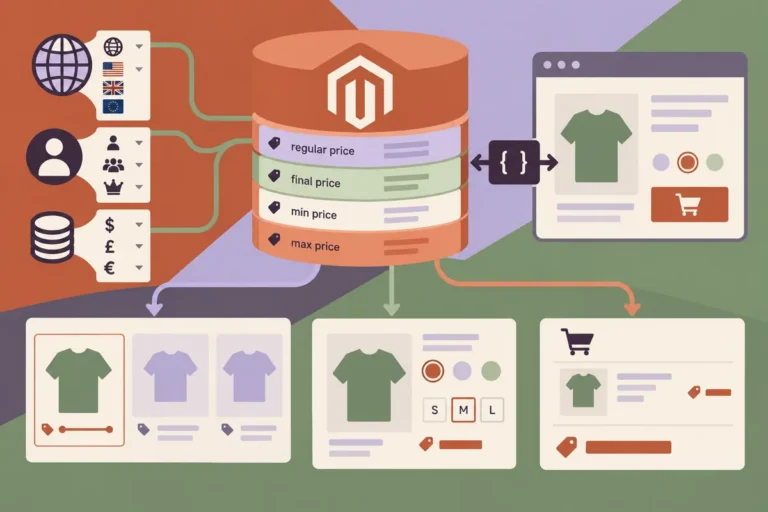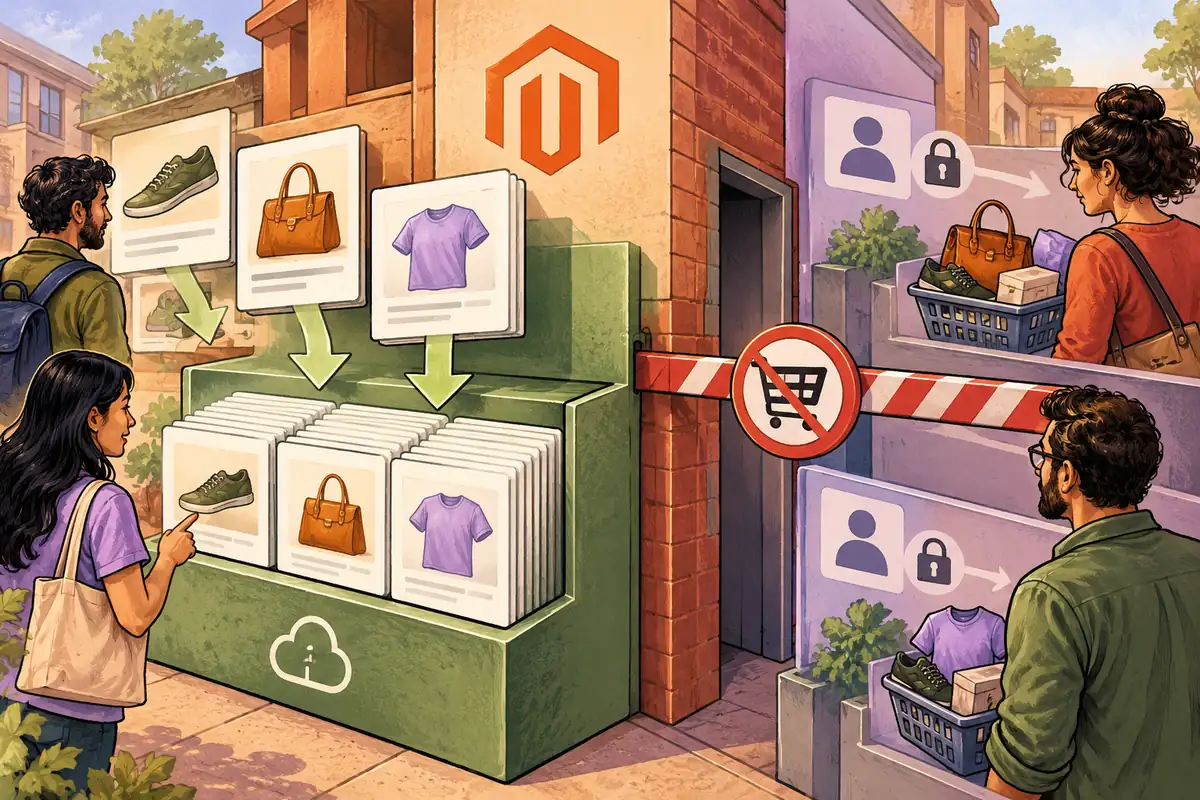
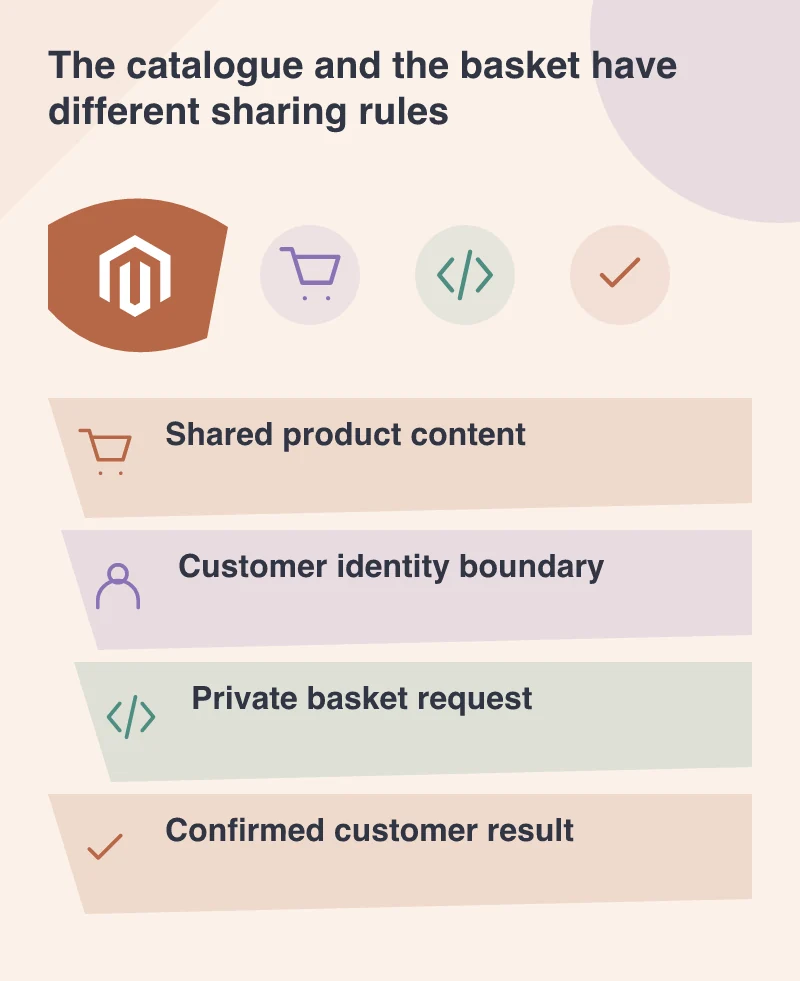
Caching makes a storefront feel quick by reusing work. That is useful until the work being reused belongs to somebody else. Magento 2.4.7’s April release gives headless teams a timely baseline for reviewing their API boundary. Its versioned cart schema marks cart queries as noncacheable—a clear reminder that a public catalogue and a customer’s basket do not have the same sharing rules.
Draw the boundary before choosing a cache setting
List the data the frontend requests and identify which responses are public, contextual or customer-specific. Product descriptions may be suitable for a shared strategy, while a basket, account address or personalised result needs different treatment. Avoid one broad caching rule applied to every request because the endpoint happens to be the same.
GraphQL makes that distinction especially important to discuss explicitly. Different operations can travel through the same service while having very different privacy and freshness needs. The application, server layer and any intermediary need a consistent understanding of which response may be reused and for whom.
Test with two customers, not one
A staging demonstration with a single signed-in account cannot prove isolation. Use distinct test accounts with recognisably different baskets and account details. Move between them through the normal sign-in and sign-out flows, and inspect what appears after navigation, refresh and return visits.
Also examine the guest-to-customer transition. A person may build a basket before signing in, and the application needs a deliberate rule for what happens next. The Magento schema exposes operations for relevant cart transitions; the storefront still has to communicate their result without losing the customer’s understanding of the items they selected.
Refresh the result after a change
When an item is added, removed or updated, show a state that corresponds to the confirmed backend response. An optimistic interface can be helpful, but it needs a clear recovery route if the operation fails. Otherwise the customer may see a basket that only exists in the frontend’s assumptions.
Recheck totals and availability at the appropriate points in the journey. A previously displayed result may no longer be current after an operation or a change of context. The goal is not to refetch everything constantly, but to establish which information becomes stale and which action makes it authoritative again.
Review the complete delivery path
Inspect the browser, the application server and the caching layer used in the actual deployment design. A correct backend directive does not excuse a custom intermediary that stores or exposes information incorrectly. Document the intended behaviour so later performance work does not accidentally cross the same boundary.
Faster delivery depends on knowing what can be shared safely and what must stay specific to the person requesting it. A store that keeps that distinction clear can improve performance without making privacy or basket accuracy depend on which customer happened to visit first.