
A business may be unable to accept new orders and still have plenty of information customers need. They want to check an existing purchase, read care instructions, understand a delay or find a reliable way to get in touch. During March’s COVID disruption, switching off the entire website can remove those useful functions at exactly the moment people are looking for reassurance.
Separate the website from the checkout
Google’s 26 March guidance recommended keeping a temporarily paused business website online and limiting its functionality instead of disabling the whole site. Examples included marking products out of stock or restricting the cart and checkout. The advice addressed search visibility, but it also fits a straightforward customer-service need: keep dependable information available while the trading situation changes.
A site can therefore be operational without taking new money. That distinction helps a business choose a proportionate response rather than treating online and offline as the only two settings.
Say exactly what a customer can do
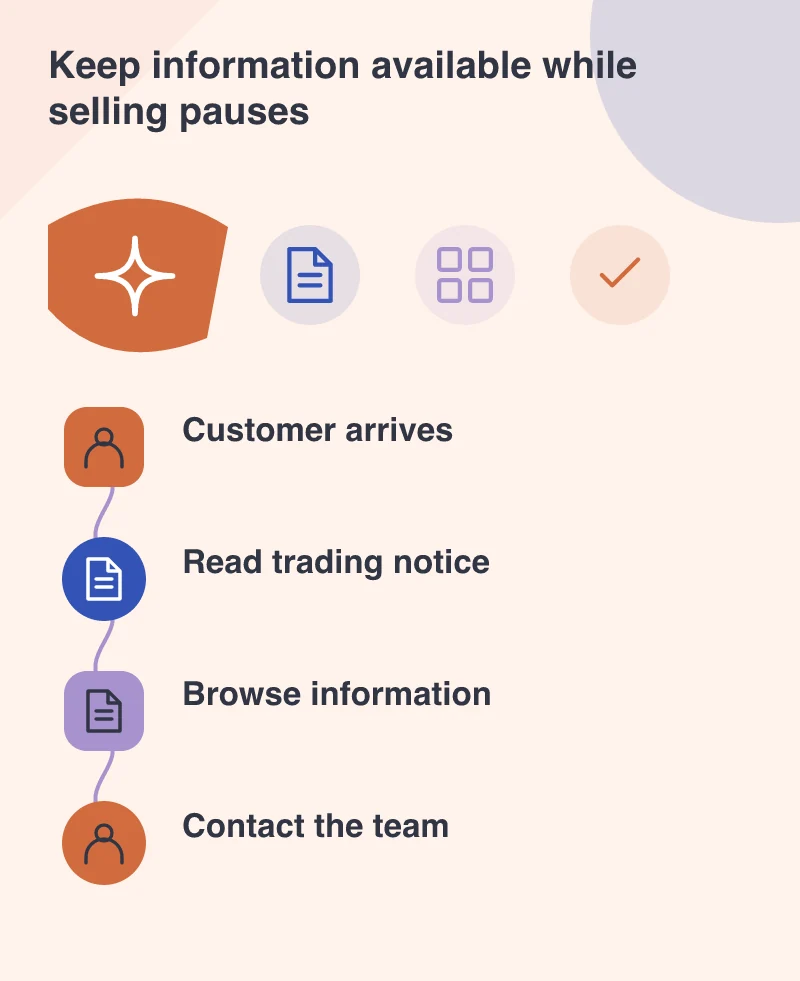
Consider a retailer whose dispatch operation has stopped temporarily. A prominent notice can explain that new orders are paused, existing orders are being reviewed and the contact route remains available. Product pages can stay readable. The wording should distinguish a delivery delay from an unavailable product and avoid dates the team cannot support.
Put the message near the affected action, not only on a homepage banner. Someone arriving directly on a product page from search may never visit the homepage. Check the basket, delivery information, order-confirmation messages and automated emails so that they do not contradict the current notice.
Keep the underlying signals consistent
If checkout is restricted, the product information sent to other services needs review as well. A stock message on the visible page should not be contradicted by a feed advertising immediate availability. Ask the people responsible for the catalogue, marketing channels and website to work from the same operational decision.
Technical responses matter too. Replacing every URL with a generic closure page tells both customers and search engines a different story from keeping the original information available. Google’s announcement explained that a complete shutdown can have significant search consequences. The exact implementation should follow the temporary need rather than copying a permanent site-closure pattern.
Design the route back to normal operation
Write down who can change the notice, reopen checkout and verify the first new order. Keep a short record of the restrictions introduced so that reopening does not leave hidden blocks in place. A banner is easy to notice; an old delivery rule or disabled payment method can be easier to forget.
The website’s role during disruption is practical. It can reduce uncertainty, answer repeated questions and help people understand which actions remain possible. That does not require optimistic promises. A clear, maintained account of what the business can currently do is more helpful than either silence or a familiar sales message that no longer matches reality.