

A return policy can be technically present and still leave a buyer unsure what will happen. The deadline is in one paragraph, a product exception is elsewhere and the cost of returning an item is difficult to find. Google’s June support for organization-level return-policy markup creates another way to describe the policy to search systems. It is most useful after the policy itself has become clear.
Write the customer explanation first
Identify the practical questions a buyer needs answered: which purchases are covered, the applicable time window, the route to start a return and any relevant costs or exceptions. Have the responsible business owner confirm the content. This is an editorial and operational task before it is a structured-data task.
Use language that someone can act on without interpreting internal process names. A page that refers to a code known only to staff does not help a customer decide what to do. Keep the route to support visible where a case cannot be explained by the general policy alone.
Use the general policy without losing exceptions
The June announcement adds organization-level support so a business can describe a general policy rather than repeat everything separately for each product. That can reduce duplicated maintenance. It does not mean every item must be presented as having identical conditions when the business has a genuine, documented exception.
Keep the relationship between the general rule and the product-specific information clear. A customer should not discover an important difference only after purchase. Where the implementation describes an exception, check that it agrees with the visible product page and the process the support team actually follows.
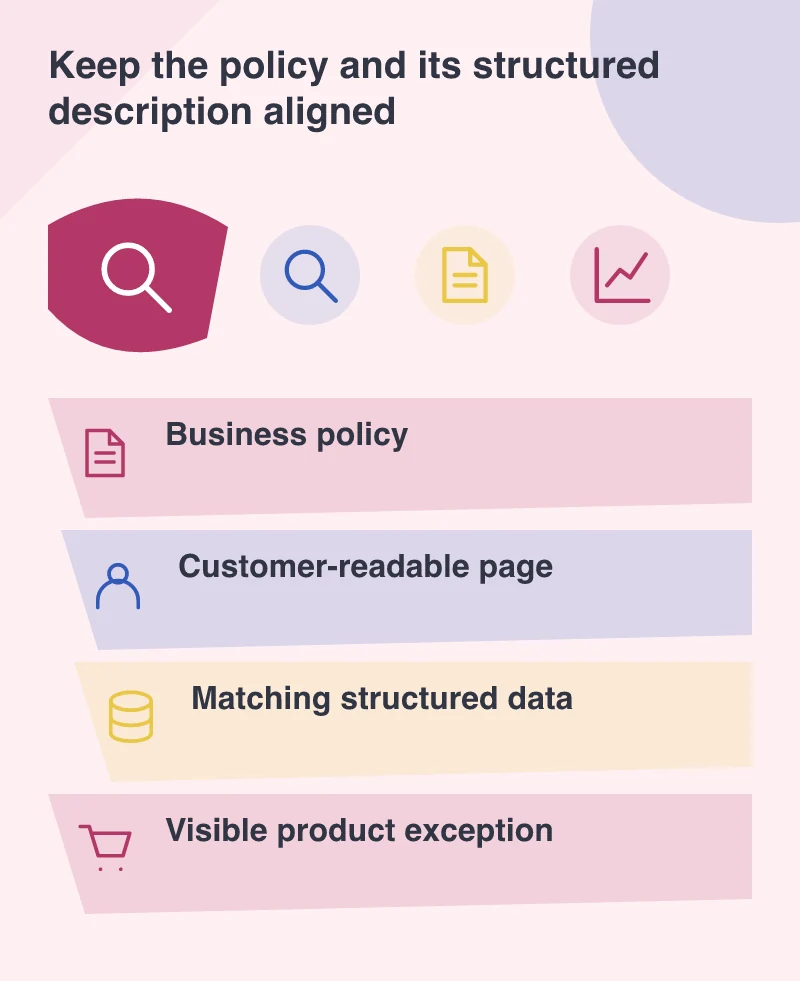
Make the markup match the page
Structured data should describe the real policy, not a more attractive version created for search presentation. Review the fields against the approved wording and test the implementation with the appropriate validation tools. A technically valid value can still be an inaccurate description of the business’s policy.
Also inspect how the markup is generated. If it is copied into several templates or plugins, a future change may update only one place. Give the policy a clear source of truth and identify who is responsible for keeping both the visible explanation and its machine-readable representation consistent.
Check the journey after the customer decides to return
Follow the link or instructions as an ordinary buyer. Can the person identify the relevant order, understand what information is needed and see what happens next? A good search presentation cannot repair a broken return request or a support team working from different wording.
Return-policy markup is a useful technical addition, with no guarantee that a particular search display will appear. The stronger outcome is a policy that is easier to find, explain and maintain across the customer journey. Accurate structured data then becomes another expression of the same clear information, rather than a separate version of the promise.