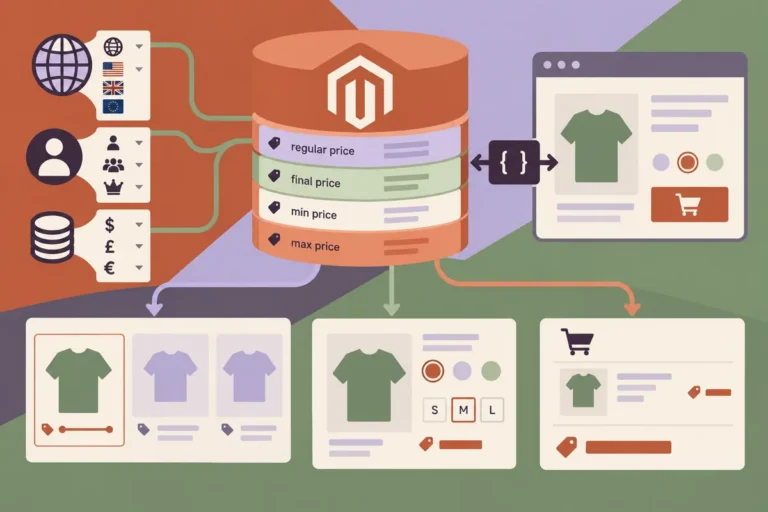
A retailer wants to reorder the products they already sell well. They know the range and would happily place the order themselves, if they could see the right catalogue and terms. Shopify’s April announcement extends foundational B2B features to Basic, Grow and Advanced plans. For a business moving its first wholesale customers online, the opportunity is to make that repeat purchase easier for both the buyer and the team receiving it.
Choose a real wholesale buying situation
Begin with a buyer the sales team understands. Record which products they can buy, how they identify the right pack and what purchasing arrangements have already been agreed. A wholesale storefront needs to express those working relationships clearly; copying the retail page and adding a trade label leaves too many questions unanswered.
Check the features available on the store’s plan against this specific requirement. Shopify’s announcement distinguishes the foundational capabilities from more advanced Plus features. A business with a simple shared trade catalogue may need a different setup from one negotiating a separate agreement for every customer and location.
Make the catalogue comfortable to order from
Use product names, pack quantities and measurements that match the buyer’s working language. Someone replenishing a shop should be able to tell whether they are ordering an individual item or a case. Show the relevant purchasing rules near the choice, before the person has invested time filling a basket.
Test an ordinary repeat order with a small change: another pack size, an unavailable line or a substitute. Watch whether the customer can understand the difference and continue. The store should help them place an intentional order rather than leave the sales team to correct an ambiguous one afterward.
Follow the account and the order together
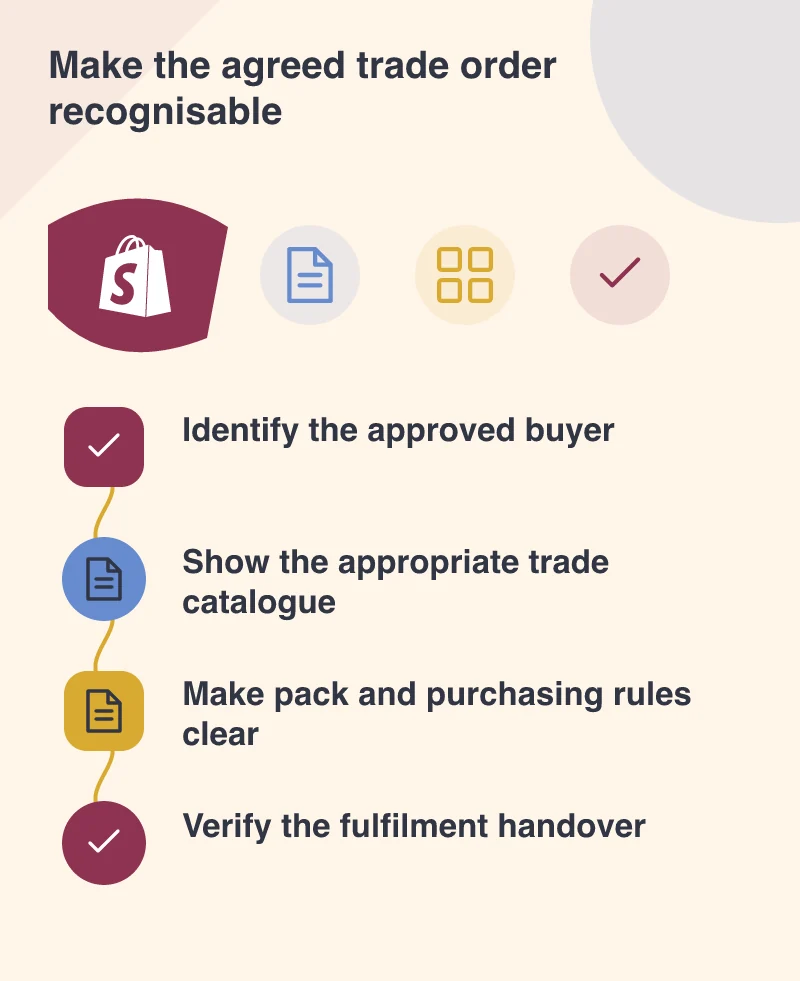
Confirm that the approved buyer sees the appropriate offer after signing in. Then follow a test order into the staff system, checking the company, delivery location and the purchasing terms that should accompany it. These details are particularly important when a business serves retail and wholesale customers from the same operation.
Give support a clear way to investigate an account question. If a buyer cannot see the expected range, the team needs to identify the relevant company and catalogue arrangement. A shared reference and a short working guide are more useful than asking the customer to repeat their entire purchase history.
Make the first handover deliberately small
Invite a manageable group of buyers into the new journey and tell them where to ask for help. Observe the questions, the orders needing manual correction and the work still being repeated by email. Use those findings to improve the next release rather than expanding every trade relationship at once.
Success is easy to recognise: the buyer can identify the right items, place an order under the agreed arrangement and understand what happens next. The fulfilment team receives a record it can act on. Native B2B tools can support that experience when the catalogue, accounts and operational responsibilities are prepared together.