
A store can display a different currency long before it is ready to serve a different customer. Imagine a buyer finding the right product, reaching checkout and discovering that delivery to their address is unavailable. Shopify’s Summer ’24 announcement brings international, B2B and retail expansion into the new Markets direction. For a merchant, the useful question is how one complete order will work in each market.
Begin with a person and a place
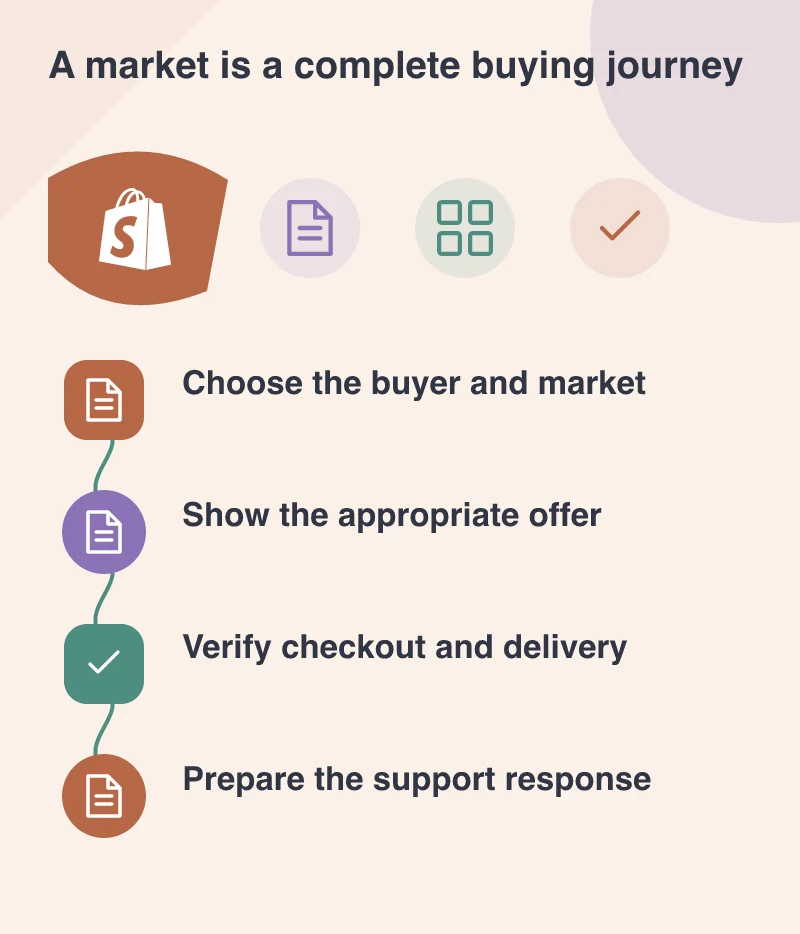
Choose a specific starting audience: a retail customer in one new country, or an approved wholesale buyer with a known delivery address. Describe what they need to see, how they will pay and who will answer their question. This is a more manageable brief than turning on every available region and hoping the exceptions reveal themselves.
Record the practical differences from the store’s existing journey. Products, language, prices, shipping options and service messages may need different treatment. Review the capabilities and eligibility available in the store before committing to a particular arrangement; the announcement does not remove those operational choices.
Follow the promise through the order
Use one product that the new audience is likely to buy. Read its page as that customer, check the delivery information, place a test order and follow the confirmation. Then ask the fulfilment team what they received. A market is ready when the promise on the page survives the work behind it.
Include an awkward but ordinary example. A bulky item, an unavailable variation or a return question will often tell you more than a simple purchase. If an answer depends on a staff member’s memory, bring it into the working instructions or customer-facing explanation before widening access.
Keep a shared catalogue understandable
A single business may serve several audiences without showing every audience exactly the same offer. Make the reasons for differences explicit to the people maintaining the catalogue. The retail team should know why a product is excluded from a wholesale range; support should know which delivery message belongs to which buyer.
Also agree how changes are checked. A new photograph can be harmless across markets while a shipping promise is highly specific. A small release record identifying the affected audiences helps the next editor make a careful update without having to rediscover the entire setup.
Launch where the team can learn
Start with a market narrow enough for support and fulfilment to observe. Track the questions people actually ask, the orders requiring manual intervention and the pages where visitors cannot make a confident choice. These observations give the business a useful next list of improvements.
The same discipline applies to a headless commerce project: the buyer context needs to reach the page, basket and checkout consistently. A polished market selector is only the opening move. A customer should feel that the store understands their situation all the way to the parcel and the follow-up conversation.